It's about how the arts could perhaps learn a little from grassroots football. Comments please...
I’m going over to the other side
I’m happy to have and not to have not
Big business is very wise
I’m inside free enterprise
This is not a love song
This is not a love song
This is not a love song
This is not a love song
This is not a love song
This is not a love song
Not a love song
I’m adaptable, I’m adaptable
I’m adaptable and I like my new role
I’m getting better and better
And I have a new goal
I’m changing my ways where money applies
(This is not a love song, Public Image Limited, 1983)
What can the arts learn from football? A lot about
developing a connected culture in which children, amateurs and
professionals see clear links and participate/ spectate on every level,
Nina Simon wrote recently.
The world of football is similar to the arts in many ways: taking part,
audiences, celebrity and anonymity, economic and intrinsic benefits/
values, large costly buildings and jumpers for goal posts, health and
wellbeing, and more. Oh, and let’s not forget finance: public subsidy
and big business sponsorship. There’s also, at the ‘top level’, The
World Cup and Venice Biennial. Lots of similarities, then. Not all good.
What football does well is undoubtedly present a
cultural phenomenon that is accessible at every level. A sport where
even the premiership elite are, well, not really that elitist. A game
where kids playing in a back lane or park and blokes with hangovers
kicking each other as much as the ball are respected. Professionals
regularly going into schools for training sessions and awards
presentations as well as helping smaller clubs and amateurs fund raise.
Football can also be ‘viewed’ live in world class stadiums or patchy
local pitches and watched on TV at home or down the pub. Yes, costs of
attending a premiership game are prohibitively high for many people; as
is a subscription to Sky Sports. But anyone can take part and you don’t
hear accusations of amateurism or that’s ‘not football’. Some may say,
‘football is different from art’. Of course, on one level, this is true;
yet, on another level, the two activities are similar, essential
aspects of our lives.

Like football, the arts are engrained into our daily
existence – whether ‘high’ or ‘low’ arts. They both have tiered,
hierarchical structures too. The problem is that elitism in the arts
means that people taking part in the arts at different levels are
perceived of very differently – from billionaire art buyers to attendees
of exclusive theatre to student art shows to people sitting watching
Corrie. Artistic excellence is paramount at almost every level for many
in the arts. It is the winning, not the taking part, that
matters. There is little space for amateurism, volunteering (except as
ways to keep wage bills down), or even socially engaged arts practice.
These are the realms of ‘not arts’ to many within the arts elites (for
they are plural, legion). Yet, ‘amateur’ art, art in schools, community
art, voluntary art, social practice, etc. offer great experiences and
pleasure to many people. The problem is that there is little option for
progression (for many) and derision lurks everywhere.
It is therefore essential that we remember that
the arts too were once much more connected to life; less elitist than is
the case in our present cultural milieu. Artisans were performers and
producers, an integral part of everyday life. Festivals were commonplace
and many people who may now feel disenfranchised by much of ‘the arts’
today took part. They were key events in the yearly calendar for
everyone in communities – they had special meanings and marked special
times. Streets and markets were often venues for free theatre and, even
when theatre buildings opened, the ‘groundlings’ still formed a
substantial sector of the audience of many Elizabethan plays. Sports,
like rugby and football, were also integral to the lives of many people.
Our neoliberal consumer society today often forgets its past. So too
does much of our contemporary arts world. But sports, like football,
tend to hold closer ties to their histories as integral to their
on-going narratives.
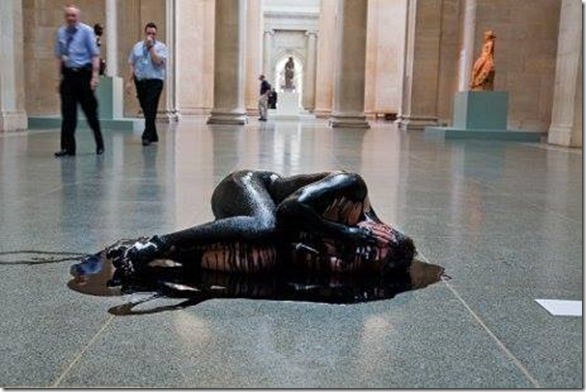
The darker side of the arts and football (and many
other areas of our contemporary lives) is undoubtedly philanthropy and
sponsorship. This is not to say that all giving is bad. It is just a
warning of the dangers of ‘tagging-on’ brands to activities for purely
commercial gain or, worse still, to deliver marketing messages that
directly conflict with the activity being ‘supported’. This will be a
topic for another post so, for now, let’s just consider
BP’s financial support for Tate and
The British Museum or tobacco
sponsorship of artist residencies in the Caribbean or
investment
bank and 2008 financial crash ‘Titan’ Merrill Lynch’s project with Tate
aimed at regenerating local areas and making places safer. This
type of activity is all about ‘realising corporate responsibility
outcomes’ – something Arts and Business are promoting heavily as a means
to increase philanthropic giving to the arts at the moment – but it
mires the arts in corporate complicity. This is different from
professional football’s out-and-out clear marketing-for-money deals, not
to mention the often essential small-scale sponsorship of local amateur
teams by local small businesses who are happy to support their team in
return for a little extra local exposure. However, football sponsorship
can be dangerously unethical too. Think about the World Cup 2014 with
big corporate sponsors including Budweiser, Coca Cola and MacDonalds.
The message: play or watch football – drink alcohol and fizzy drinks and
eat unhealthy food. Or Wonga and their shirt sponsorship of Newcastle
United – buy your season ticket and pay for it with a thousands of
percent loan you might end up never repaying! The danger for the arts is
that, not only will the ethical and moral concerns about current big
arts sponsors affect the independence and critical essence of the arts,
but the drive for philanthropic giving may lead to Wonga sponsoring
participatory art projects in ‘disadvantaged’ communities, etc.
Nonetheless, forgetting the similar drives for
both the arts and football to become increasingly commercialised (at
least at their ‘top’ levels), there are, perhaps, lessons the arts might
glean from football. It has retained its grassroots up appeal and
ethos. Think of (local Toon legends) Gazza, Peter Beardsley, etc. They,
like many other people who managed to become professional footballers,
had difficult upbringings but became famous (not always just for
footballing achievements). They started out playing at school; they were
encouraged by sports teachers and (sometimes) parents. They were
developed in volunteer-ran ‘boys clubs’ with little funding but loads of
commitment to the young lads having a chance in (footballing) life.
Professional clubs went there to find ‘new talent’. The professionals
paid their dues, coming back to help raise money for the clubs and to
help train new generations of possible future pros. Even those who
‘didn’t make it’ still found new friendships and enjoyment in taking
part and trying; some stayed to volunteer to help keep the clubs
running. If only the same thing could be said about much (not all) of
the fractured ‘arts world’ in the UK right now. As Nina Simon pointed
out, until fifty years ago soccer was derided in the US – now it is a
sport that is increasingly becoming an important national game. It built
itself up through grassroots engagement and commitment to accessibility
for all. Perhaps we in the UK now need to think seriously about rebuilding the arts from the roots up?


